
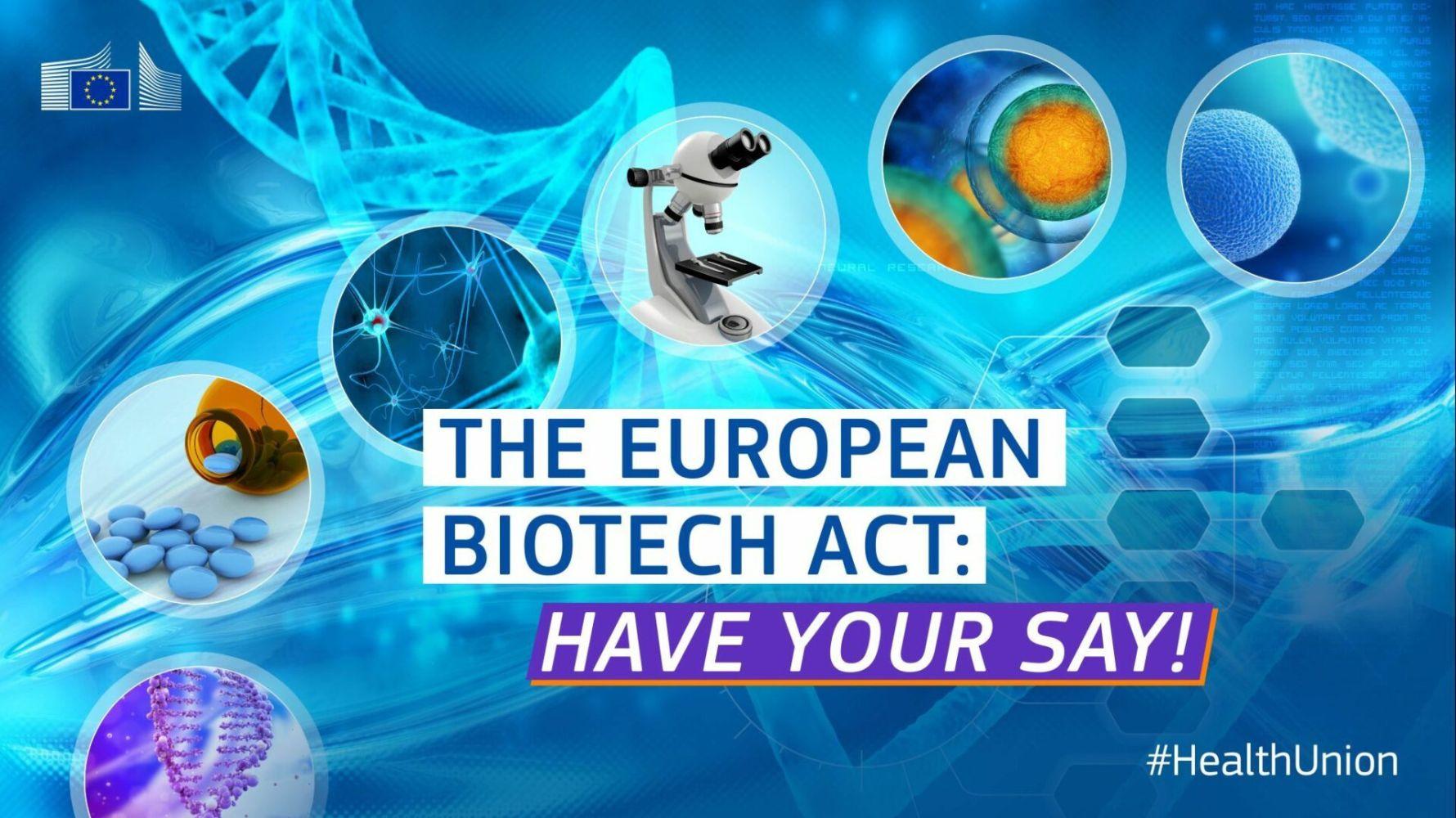
When we hear the word biotechnology, We almost instinctively think of drugs, innovative therapies, or genetic research. However, the new European Biotech Act, The proposal by the European Commission at the end of 2025 sends a message that goes far beyond the health field. It actually says something essential for the food industry as well: Europe wants to accelerate innovation without reducing safety standards. This nuance is important. For years, one of the challenges for large food companies has been the time required to evaluate and authorize new ingredients, technologies, or processes. The European Commission is now proposing a framework to make these procedures more efficient, but without changing the fundamental principle of European legislation: No product will reach the market before its safety is demonstrated.
Not fewer evaluations, but smarter evaluations
One of the proposed changes even targets the European Regulation on General Food Law. The goal is not to reduce the number of checks, but to eliminate the administrative steps that unnecessarily prolong the authorization process. For example, companies will be able to request earlier scientific advice from EFSA regarding the design of studies and testing strategies, which could reduce the number of subsequent requests for additional information and make the dossiers more robust from the outset. In parallel, certain procedural deadlines will be shortened, and the internal organization of scientific evaluations will be simplified to increase the consistency and efficiency of the process. The message is clear: speed must be achieved through better organization, not by reducing the scientific requirements.
Innovation also needs a safe space in which to be tested.
Among the proposed innovations is the introduction of the concept of „regulatory sandbox” in the food sector. Practically, Member States could create controlled environments where innovative technologies or solutions are tested under strictly supervised conditions, before their widespread application. For the industry, this is an important change. Instead of allowing innovation to be blocked until all legislative aspects are clarified, it can be evaluated under real conditions, under the supervision of competent authorities. The consumer remains protected, and companies can more quickly understand whether a technology is viable and safe.
Biosecurity and trust remain essential conditions
Perhaps the most interesting message of Biotech Act is that, while encouraging the development of biotechnologies, artificial intelligence and the use of data, the proposal simultaneously introduces measures dedicated to biosecurity and the prevention of the abusive use of these technologies. This is an approach that reflects the way the entire food industry is evolving: technological progress can no longer be separated from responsibility. The more powerful tools emerge, the higher the expectations regarding control, traceability and risk assessment become.
What does this mean for the food industry?
Beyond the legislative changes, the Biotech Act sends an important signal: Europe does not intend to choose between innovation and food safety, but to bring them closer together. For producers who are already investing in research, their own laboratories, traceability, and scientifically validated processes, the direction is a natural one. Innovation is no longer seen as an exception to be tolerated, but as a strategic resource, provided it is supported by evidence and rigorously evaluated. In essence, the most valuable idea of the new Biotech Act is not that products will reach the market faster, but that Europe is trying to reduce the time needed for innovation without reducing the time dedicated to demonstrating their safety. For the food industry, this is probably the most important change in perspective.
Relevant changes for the food industry
The legislative proposal changes Regulation (EC) No 178/2002 on general food law, With the aim of streamlining the risk assessment processes and accelerating innovation. The main changes are:
- Extending the consulting services provided before filing the applications, Thus, it will include scientific aspects such as the design of studies and testing strategies. At the same time, the consultation procedures are grouped into a single mechanism to simplify the authorization process.
- Reduction from six to three months the delay period applicable in case of failure to comply with the obligations regarding the notification of studies before filing the dossier, in order to reduce the time required for the placing on the market of new products.
- Increasing the efficiency of the work of EFSA (European Food Safety Authority) by appointing EFSA staff to chair the expert groups and to hold the position of Vice-President of the Scientific Committee (without voting rights), thus ensuring better consistency between the working groups.
- Introduction of the legal framework for „regulatory sandboxes”, These regulations will allow Member States to test innovative technologies under harmonized conditions, stimulating innovation without compromising the health and safety of consumers.
Overall, these changes aim to accelerate the risk assessment processes carried out by EFSA for products subject to authorization before placing on the market, as well as creating a regulatory framework more favorable to innovation in the field of food and feed safety, thus contributing to the strengthening of the European biotechnology sector.