


The CSR Media team invited the leaders of the most important companies implementing sustainability and corporate social responsibility projects to share their visions on the challenges in the sustainability field for the year 2025, while also offering forecasts and perspectives for the year 2026, within the editorial project #AfaceriSustenabile2026.
Through this project, we aim to explore and understand the opinions and solutions proposed by leaders, highlighting current challenges in the field and anticipating future directions for sustainable business by 2026.
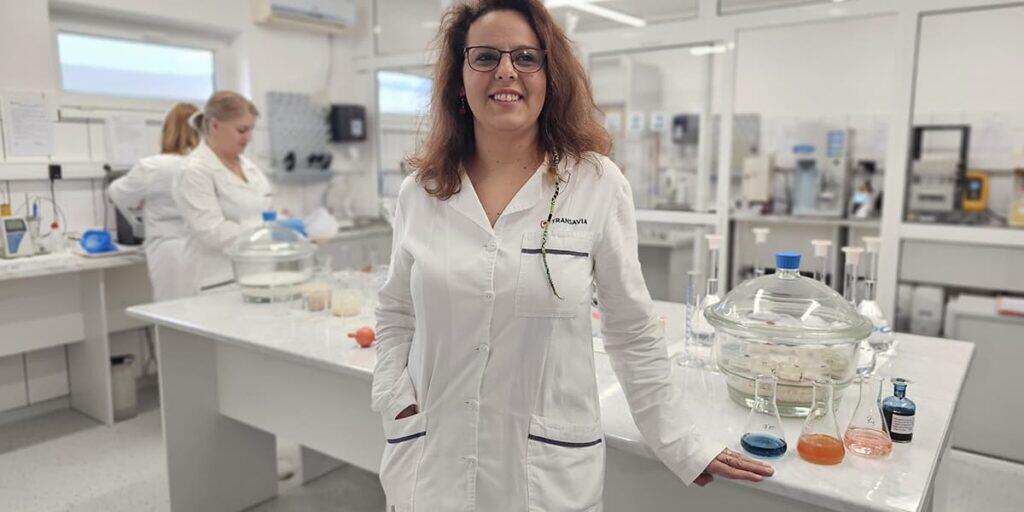
Below you can read the interview granted by Diana Pavel, Environment Director of TRANSAVIA for CSR Media.
What were the main challenges and opportunities you encountered in 2025 in meeting your sustainability objectives, and how were they addressed?
The year 2025 was a testing ground for any company that treats sustainability as a real commitment, rather than a declarative exercise. The main challenge was the external context: the evolution of reporting requirements and the climate change resilience test.
For TRANSAVIA, the approach was a pragmatic one. We treated reporting as a working tool, rather than a compliance exercise. In 2025, we finalized the company's first sustainability report built entirely on ESRS standards, before they became mandatory, being once again the first ones to take this step, in the industry in which we evolve. At the same time, aWe calculated the carbon footprint across the entire operational chain, using primary data from our own operations, an approach that gave us a more precise understanding of our actual impact and the points where we can intervene effectively.
At the same time, 2025 was also a year of opportunities. It was the moment when investments made in previous years in green energy, digitalization, and operational control, from farm to fork, produced clear benefits. The same thing happened in the social and governance areas, where our consistent actions led to the refinement of already mature processes in spheres such as food safety, animal welfare, or health and occupational safety. We had operational stability, predictability, and the ability to maintain high standards even in a difficult external context. This continuity gave us a real advantage: we were able to meet the new reporting requirements without changing the essence of what we do, but just the way we document and explain the things we have been practicing for a long time.
What were the key sustainability initiatives implemented within the organization in 2025?
For TRANSAVIA, 2025 was a very eventful year for sustainability initiatives. In the area of governance and reporting, it was the year when we made the effective transition to ESRS standards. At the social level, we remained consistent with our assumed directions: quality and food safety, fair working conditions and remuneration for employees, and constant support for communities through involvement in supporting projects with a positive impact in education, health, and sports in local communities
In the environmental area, we focused on consolidating and expanding already functional initiatives: we continued the expansion and optimization of renewable energy infrastructure, increasing the share of domestically produced energy and reducing exposure to the volatile energy market, and we refined water and energy consumption monitoring systems across all locations, which allowed us to make targeted, rapid, and measurable adjustments.
A central element of 2025 was, however, the consolidation of our approach of circular economy and Zero Waste through the largest investment in the company's history, of over 150 million euros. This investment allows us to expand our renowned fully integrated „farm-to-fork” model with another natural step: now also "to the bowl.". The new TRANSAVIA pet food factory, the largest in Romania and one of the most modern in Europe, allows the capitalization of all sub-products generated in the technological processes and the almost complete elimination of waste from our activity. This stage naturally complements the investments already made, including the largest protein meal factory in the country, owned by the company, and closes an operational chain in which materials are used entirely, in controlled flows. Plant-based raw materials enter the compound feed factory, secondary products are further used in poultry rearing or in agriculture, and plant residues and straw are reintegrated as bedding or raw materials for other agricultural uses. Through this model, Over 99.6% of the resulting byproducts are recycled, and the amount of waste sent for disposal is reduced to a level close to zero.
All these initiatives reflect the same approach that TRANSAVIA has had for almost 35 years: Sustainability is not built through isolated projects, but through operational control, long-term investments, and the complete integration of every stage in our production chain.
What are the strategic priorities to ensure that sustainability aspects are integrated into all operational aspects of the company in 2026?
For 2026, process digitalization and investments in people. Sustainability does not work without agility and internal competence. The training, retention, and engagement of teams remain essential for the strategy to be implemented consistently, at all levels of the organization. Another important direction is the even closer alignment of value chain partners with our standards. The integrated model gives us a major advantage, but responsibility does not stop at the boundary of our own operations.
How do you see the evolution of the Sustainability field for the upcoming period?
Sustainability is entering a phase of maturity. It is no longer defined exclusively by the volume of reporting or the complexity of the regulatory framework, but by the actual capacity of companies to understand, control, and manage the impact of their own operations. Even in a European context where certain reporting requirements are simplified, the stakes remain the same: internal discipline, data quality, and the coherence of decisions.
For the agri-food sector, the pressure does not disappear, it just shifts. Regulations may become more flexible, but consumer expectations are constantly rising. Product origin, production methods, food safety, environmental impact, and responsibility toward people are criteria that weigh increasingly heavily in purchasing decisions. In this context, the competitive advantage will belong to companies that have real control over their processes and can demonstrate their performance through actions, not just formal compliance.
TRANSAVIA is prepared for this stage, because, right from the beginning, we have seen sustainability as a criterion for long-term resilience and competitiveness, not as a reporting obligation, and this approach will continue to make a difference in an industry undergoing transformation.