
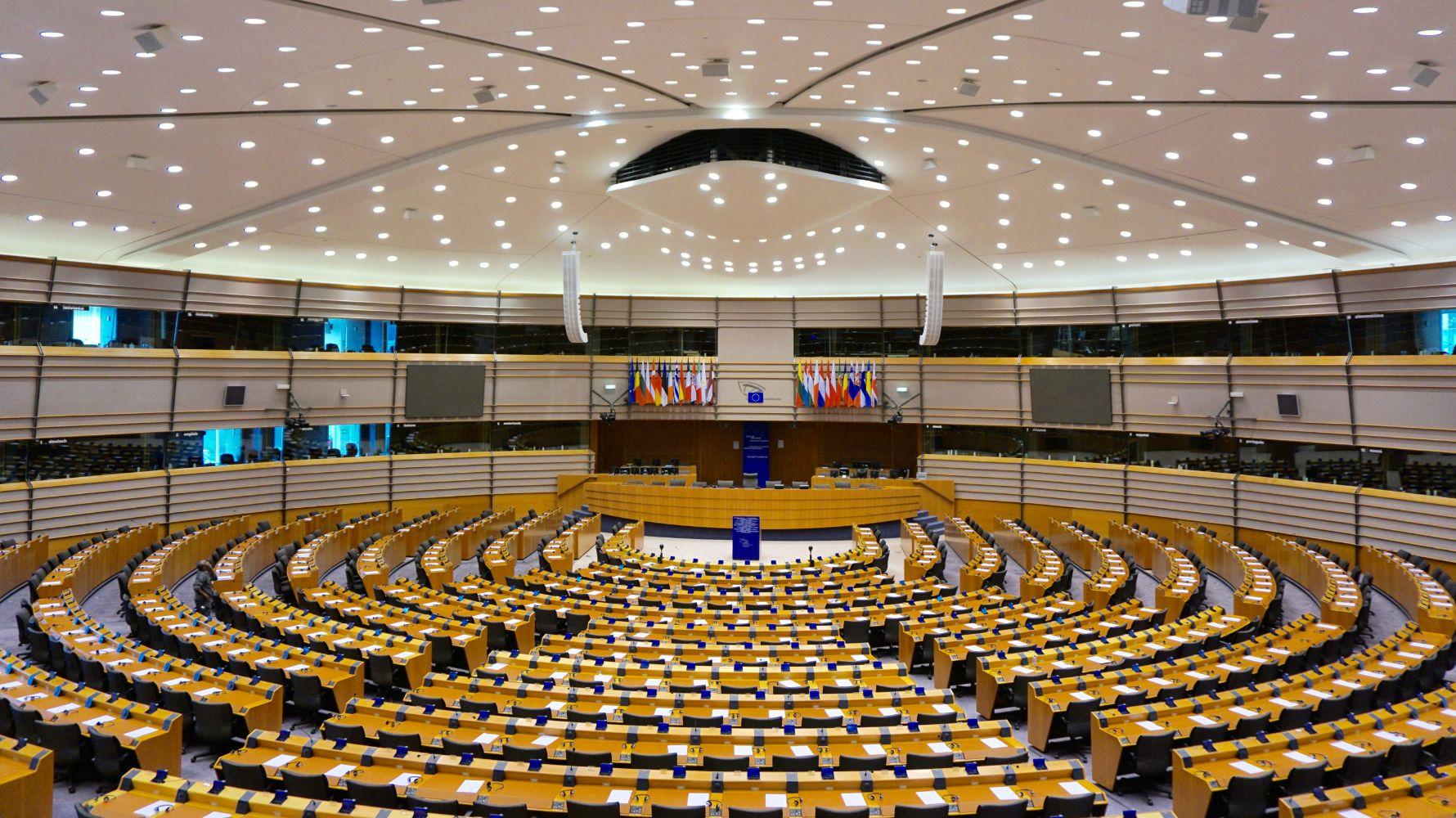
In recent years, discussions about consumer protection have focused primarily on rights: clearer labels, safer products, the possibility of returning a product or filing a complaint. New Consumer Agenda 2030, However, the European Commission’s adopted directive shows that the direction is changing. The focus no longer lies solely on what happens after the purchase, but on how trust is built before the product reaches the shopping cart.
For the food industry, this is an important change of perspective. The European consumer will not only evaluate the product itself, but also how easy it is to verify the information about it, how transparent the producer is and whether the promises made are backed by facts, not just by marketing messages. In practice, this will be a shift towards „less statements, but more evidence.”.
Consumer Agenda 2030 It focuses on strengthening the enforcement of legislation and combating unfair commercial practices, especially in the online environment. For producers that are already investing in traceability, food safety and process control, this does not necessarily mean new rules, but a change in the way the market will reward responsible behavior. In the coming years, The difference between companies will be made less and less by what they say about their products and more and more by what they can demonstrate.
Another important signal is the emphasis placed on simplification of information for consumers and on eliminating practices that can mislead people. In a market where consumers are exposed daily to hundreds of messages and claims, clarity begins to matter as much as innovation, and for the food industry, this means that traceability, quality control and evidence-based communication are no longer just compliance obligations but elements that build differentiation and long-term trust.
Sustainability becomes part of the product's value
The agenda promotes the expansion of the offer of sustainable products, the support of the circular economy, and the facilitation of more responsible choices. For producers, the message is clear: sustainability is no longer a separate project, but a dimension that will increasingly influence how the value of a product is perceived. In the food industry, this requires investments in the efficiency of resource use, reducing waste, valorizing by-products, more sustainable packaging, and processes that can demonstrate a low impact on the environment.
What it means Consumer Agenda 2030 for the industry?
From the perspective of producers, the Consumer Agenda 2030 talks about a change that is deeper than just updating some rules. It confirms the fact that Future success will belong to companies that constantly invest in solid processes, traceability, transparency, and fair relationships with consumers., In an increasingly competitive market, trust will no longer be solely the result of a good product, but of the ability to demonstrate, at every stage, that that product is produced responsibly.
Specific actions
The agenda commits the European Union to:
- adoptions Digital Fairness Act (Law on digital fairness);
- protect consumers in the online environment, especially minors;
- simplify the rules regarding consumer protection and ensure greater legal certainty;
- strengthen the enforcement of legislation against unfair commercial practices and unsafe products;
- reform Regulation on cooperation in the field of consumer protection (Consumer Protection Cooperation Regulation);
- expand the availability of sustainable products and ensure the right to repair (right to repair);
- support the development of the circular economy, including by facilitating returns, supporting the market for second-hand products and start-ups in the circular economy;
- eliminate the barriers in the Single Market and any form of discrimination between consumers;
- improve consumers’ access to the rights related to travel services;
- facilitate access to cross-border financial services.
Relevant legislation
- The Digital Services Act (DSA) – Regulation (EU) 2022/2065 of the European Parliament and of the Council of 19 October 2022 on a digital single market for services and amending Directive 2000/31/EC.
- The Digital Markets Act (DMA) – Regulation (EU) 2022/1925 of the European Parliament and of the Council of 14 September 2022 on competitive and fair markets in the digital sector and amending Directives (EU) 2019/1937 and (EU) 2020/1828.
- General Product Safety Regulation (GPSR) – Regulation (EU) 2023/988 of the European Parliament and of the Council of 10 May 2023 on general product safety, amending Regulation (EU) No 1025/2012 and Directive (EU) 2020/1828 and repealing Directive 2001/95/EC and Directive 87/357/EEC.
Source of information: https://transition-pathways.europa.eu/agri-food/policies/2030-consumer-agenda
Consumer Agenda 2030 can be downloaded HERE.