


The CSR Media team invited the leaders of the most important companies running Sustainability and Social Responsibility projects to share their perspectives on sustainability challenges in 2023 and offer forecasts and outlooks for 2024 as part of the #AfaceriSustenabile2024 editorial project.
Within this project we aim to explore and understand the opinions and solutions offered by leaders, shedding light on the challenges facing the field, while anticipating the future directions of Sustainable Business in 2024.
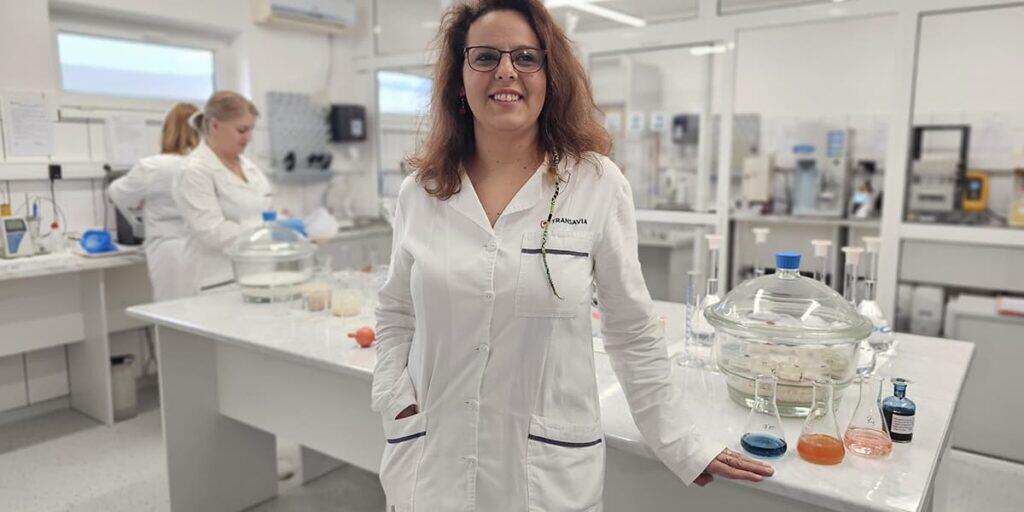
Below you can read the interview with Theodora Popa-Liteanu (photo), Vice President of TRANSAVIA SA, published on CSR Media.
What were the main challenges/opportunities you encountered in 2023 in achieving your sustainability goals and how were they addressed?
Macro-instability generated by numerous legislative changes, price volatility and inflation trends, declining public confidence, and geopolitical tensions have contributed to creating a complex and dynamic framework that has profoundly affected society as a whole. This amalgam has exerted significant pressure on public perception and the business environment in general. Implicitly, especially in the case of companies that are not financially sound, aspects related to sustainability and, above all, the necessary investments in this field have also been influenced.
As for TRANSAVIA, a solid family business where the entire team always does everything just right, from farm to fork, sustainability involves a clear strategy with long-term thinking, care for resources through the active involvement of all employees, and constant investments. Our financial health and strength have allowed us to respond quickly and agilely to changes and volatility, and to capitalize on the opportunities we identified to achieve our sustainability goals. Thus, we have been able to continue caring for our employees, animal welfare, and environmental protection. We have continued to heavily invest in green energy, in making the value chain more efficient, and in waste management, thus contributing to the steady reduction of our carbon footprint.
What were the key sustainability initiatives implemented within the organization in 2023 and how did they impact overall company performance?
We are proud that we do not just talk about sustainability, but have concrete achievements that support our ambitions in this field. In addition to complying with our rules and good practices in our daily work, we have implemented a series of major projects, thanks to which TRANSAVIA is a model for the sector. As a general strategy, in all our investments, we have adopted a proactive approach to reducing the negative impact on the environment and implemented innovative solutions to ensure that every project we support brings benefits to both the business and the environment.
We have invested over 35 million euros of our own funds in various projects, combining economic growth with a deep understanding of our environmental impact. The approximately 30 hectares of photovoltaic panels and the high-efficiency cogeneration plant we have implemented as part of the largest green energy project in Romania’s food industry will allow us to cover between 80% and 100% of the energy required for our production processes with renewable energy. I would also like to mention here the new line of processed products, which will allow us to double our capacity for processing chicken into value-added products, the construction of new energy-efficient chicken-rearing facilities, and the development of a new grain storage facility.
TRANSAVIA is one of the very few food industry producers in Romania that has chosen to fully utilize by-products not intended for human consumption resulting from the technological chain, practically avoiding the generation of waste. 2023 meant the construction of approximately 35,000 sqm of platforms for composting poultry manure, which we subsequently capitalize on to fertilize the agricultural land owned by the company. We also brought other significant improvements to our waste management infrastructure. We expanded the processing plant for waste generated from poultry slaughtering activities and built a new processing plant for hatchery waste and mortality losses in the poultry-raising process.
These investments represent not only a commitment to the future, but also a recognition of our responsibility toward the community and the environment in which we operate.
What are the forecasts or strategic priorities to ensure that sustainability aspects are properly integrated into all operational aspects of the company in 2024?
We believe that vision, governance, and leadership are key factors in successfully managing challenges, enabling a company to achieve sustainable performance. Thus, this year as well, we will continue to adhere to our ethical business principles, invest in people, in digitalization, and in streamlining and optimizing the value chain through a circular approach in all our activities, „from grain to fork”… and back, reusing every element resulting from production processes wherever possible. We will continue to identify and implement innovative solutions to continuously improve our environmental performance across all sectors of our vertically integrated 100% business, from grain cultivation to broiler farms to slaughter and meat processing. We will continue to place a strong emphasis on energy management and the conservation of natural resources, wastewater management, the reduction of greenhouse gas emissions, and best practices for animal welfare.
Since we know that there is no sustainability without profit—nor, conversely, profit without sustainability—in 2024 we will continue to implement our ZERO Losses Policy at all levels, through which our focus on sustainability is complemented by careful cost control and profit generation.
What are your plans and vision for 2024, and how do you see the evolution of these aspects in the context of anticipated changes regarding regulations, market demand, and public awareness?
2024 will mark a turning point at which sustainability will become a strategic imperative for all large companies. I would compare what lies ahead to the „GDPR revolution,” which brought about a massive shift in mindset among both companies and citizens. It won’t be easy, but I believe we will witness an evolution in corporate values and responsibilities. Undoubtedly, we have much to learn and do to align with the new regulations, but the fact that we are the only company in Romania’s poultry sector to have voluntarily published Sustainability Reports—in accordance with GRI standards—since 2019 gives us a huge advantage in transitioning to the new Directive. We will, in this case as well, do things exactly the right way!