

What you need to know
- The poultry meat produced and legally marketed in Romania is checked through national residue monitoring programs and through official controls carried out by ANSVSA and DSVSA and does not contain antibiotic residues.
- Antibiotics are not used to accelerate the growth of piglets and are not routinely administered as a preventative measure. They can only be used when necessary to treat an illness, exclusively on the recommendation and under the supervision of the veterinarian.
- After administering a treatment, the required waiting time must be observed so that the antibiotic is eliminated from the body before the birds enter the food chain.
The legislative framework
The use of antibiotics in poultry farming is regulated by a strict legislative framework at the European Union level, which establishes both the conditions under which veterinary medicines can be administered and the system for controlling residues in food of animal origin.
Main legislative acts
Regulation (EU) 2019/6 on veterinary medicinal products
- sets the conditions for the authorization and use of veterinary medicines in the European Union;
- provides that antibiotics may be used only for therapeutic purposes or, in justified cases, for controlling the spread of a disease, based on the evaluation and prescription of the veterinary doctor;
- prohibits the routine use of antibiotics and their use to compensate for hygiene, biosecurity or farm management deficiencies.
Regulation (EC) No 470/2009
- It establishes European procedures for the evaluation of pharmacologically active substances in food of animal origin and the framework for establishing maximum residue limits (MRLs).
Regulation (EU) No 37/2010
- establishes the list of pharmacologically active substances authorized and the maximum limits of residues allowed in food of animal origin;
- Only substances that have been evaluated and authorized can be used, and the limits are set so that the consumption of food is safe for consumers.
Regulations (EU) 2022/1644 and 2022/1646
- establish the European framework for the official monitoring of residues of veterinary medicines and other substances in live animals and in food of animal origin;
- obliges the Member States to implement annual monitoring and control programs.
What does this mean in practice?
In the European Union:
- antibiotics cannot be used to stimulate animal growth;
- Treatments are administered only when there is a medical justification and under the supervision of the veterinarian;
- after administering a treatment, compliance with the waiting period is mandatory, so that residues are eliminated before the animals enter the food chain;
- Poultry meat is periodically checked through official monitoring programs carried out by the competent authorities of each Member State.
How it works
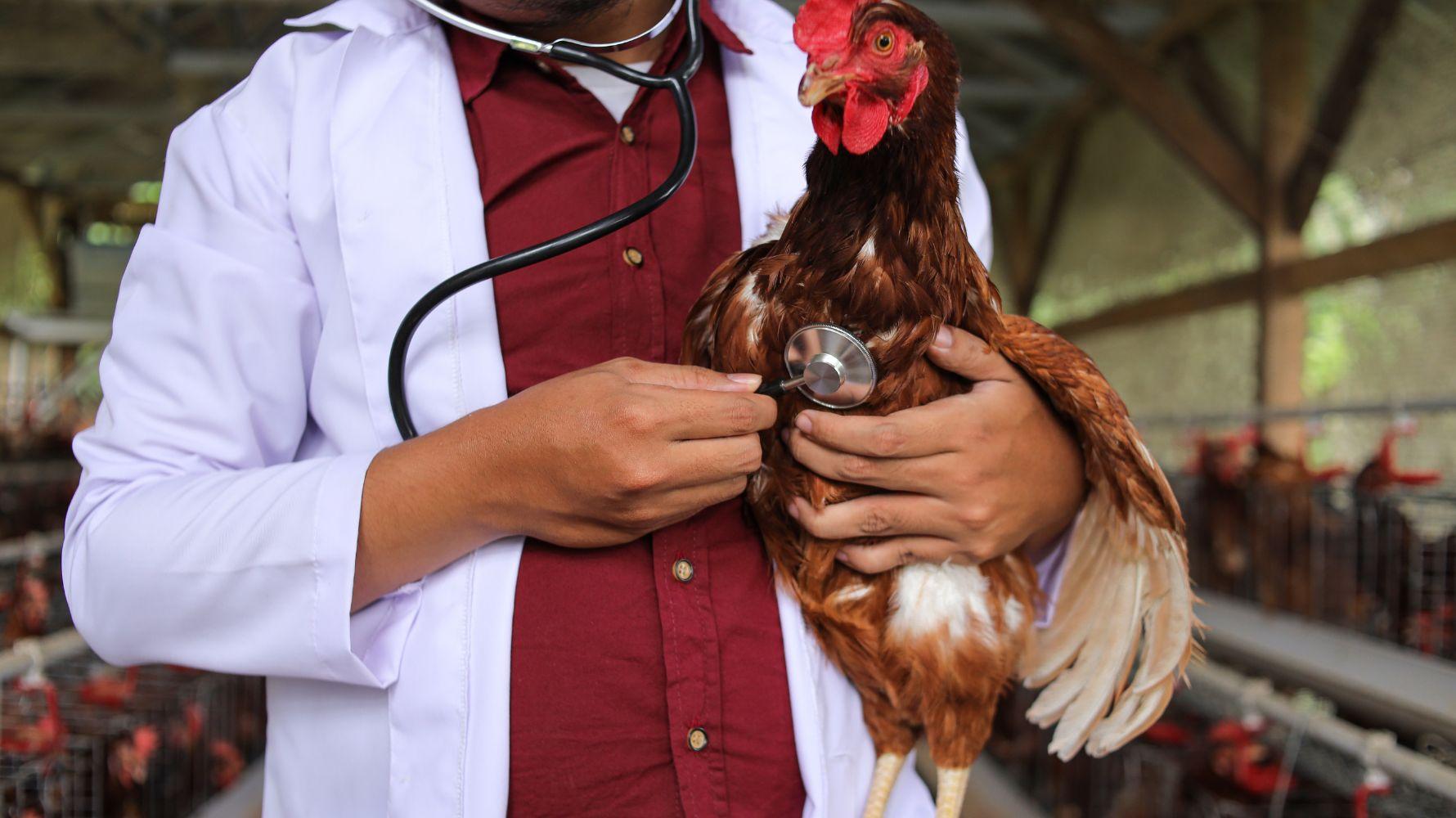
Like all animals, birds can become ill. When the veterinarian determines that treatment is necessary for the health and well-being of the herd, he or she may prescribe antibiotics.
The treatment is administered under strictly regulated conditions. For each drug, there is a waiting period: the minimum time that must elapse between the last administration and the slaughter of the birds. This interval allows the substance to be eliminated from the body, so that the meat does not contain residues above the limits allowed by European legislation.
In parallel, authorities conduct annual monitoring programs through which samples of meat and from farms are analyzed to detect residues of antibiotics and other substances. If a non-compliance is identified, the batch is withdrawn from the food chain and investigation and control measures are initiated.
How is this aspect managed in the modern poultry industry?
In modern poultry farming, the goal is to keep the birds healthy through prevention, not through the frequent use of antibiotics.
This involves:
- strict biosecurity measures;
- vaccination programs and veterinary monitoring;
- the quality control of water and feed;
- well-being conditions that reduce the risk of disease;
- the use of antibiotics exclusively when there is a medical indication.
Each treatment is recorded in the farm's records and can be verified by the competent authorities. Compliance with the waiting time is mandatory before the birds enter the food chain.
Where do the confusions come from?
Antibiotics are frequently associated in public space with the idea that they would remain in the meat and would inevitably reach the consumer. In reality, there is often confusion between the administration of a treatment and the presence of residues in the final product.
Confusion is also fueled by the emergence on the market of mentions such as „grown without antibiotics” or „zero antibiotics (ever).” These communications can create the impression that other products contain antibiotics, when in fact all legally marketed meat must comply with the same strict limits on residues, regardless of the messages on the label.
In conventional systems, antibiotics can be administered when the health of the animals requires it, but only with respect to the waiting time and all legal requirements. In both cases, the meat that reaches the market must be safe for consumption and comply with legislation regarding residues.
In figures
- Within the National Residue Monitoring Program, samples are analyzed to detect residues of antibiotics, hormones, pesticides, heavy metals, and other substances of interest to food safety.
- One of the ANSVSA monitoring programs was carried out 2,397 tests for poultry meat, of which 582 They targeted antibiotic residues. It was identified one single non-compliant sample, The authorities immediately applied the measures provided for by the legislation, including an investigation and the withdrawal of the batch.
- In 2026, an audit by the European Commission on the Romanian system of control in the field of the use of medicated feed was completed without remediation recommendations, confirming the compliance of the national control system.
In a nutshell
Antibiotics are used only when the health of the birds requires it and only under the supervision of the veterinarian.
✔ The waiting time must be respected before the birds enter the feeding cycle.
✔ The poultry meat sold legally is checked through official controls and residue monitoring programs.
The „no antibiotics” labeling describes a growing system and does not mean that the other products legally on the market contain antibiotics.
Did you know that...
Since the establishment of TRANSAVIA in 1991, there has been no evidence, out of the more than 800 analyzed by the authorities or by our laboratories, in which prohibited substances or exceedances of antibiotic residue limits were detected.
Through the commitments undertaken, at TRANSAVIA antibiotics are administered to the chickens only when strictly necessary, following veterinary diagnosis, and they belong exclusively to the third group, that is, the group of antimicrobials that are not used in human medicine. Therefore, the probability of the occurrence of antimicrobial resistance in humans caused by the consumption of chicken meat from TRANSAVIA is zero. Moreover, the percentage of birds treated with antibiotics is extremely low: less than 3% of the total flock. This means that approximately 97% of our birds (and consequently the resulting products) have never been treated with antibiotics, which virtually eliminates any risk of residues. If a treatment has been applied, we have available all the supporting documents: clinical diagnosis, analysis reports, results of the antibiotic chart, documentation regarding the waiting time and compliance with veterinary legislation. These measures ensure that our products comply with legal requirements and do not contain antibiotic residues.
A relevant comparison can be made with the practice in human medicine, where antibiotics are often prescribed without a prior antibiotic susceptibility test. In cases where the treatment does not yield results, it is replaced with an antibiotic with a broader spectrum. In the case of birds, such an approach is not permitted. Veterinary prescribing is only possible following a clinical examination, sample collection, obtaining a test report, and testing the sensitivity of the isolated bacteria (antibiogram). This difference reflects the high level of rigor and responsibility that we apply in veterinary treatments, in accordance with the principles of animal welfare and the food safety requirements assumed at European level.