

What you need to know
- Salmonella is a bacterium present in nature. There are over 2,500 serotypes, but only a few are relevant to public health. In the case of poultry meat, the most important ones are Salmonella Enteritidis and Salmonella Typhimurium.
- Romania, like all the member states of the European Union, applies an integrated program of control of salmonella, based on the „farm to fork” principle, which involves monitoring the entire production chain.
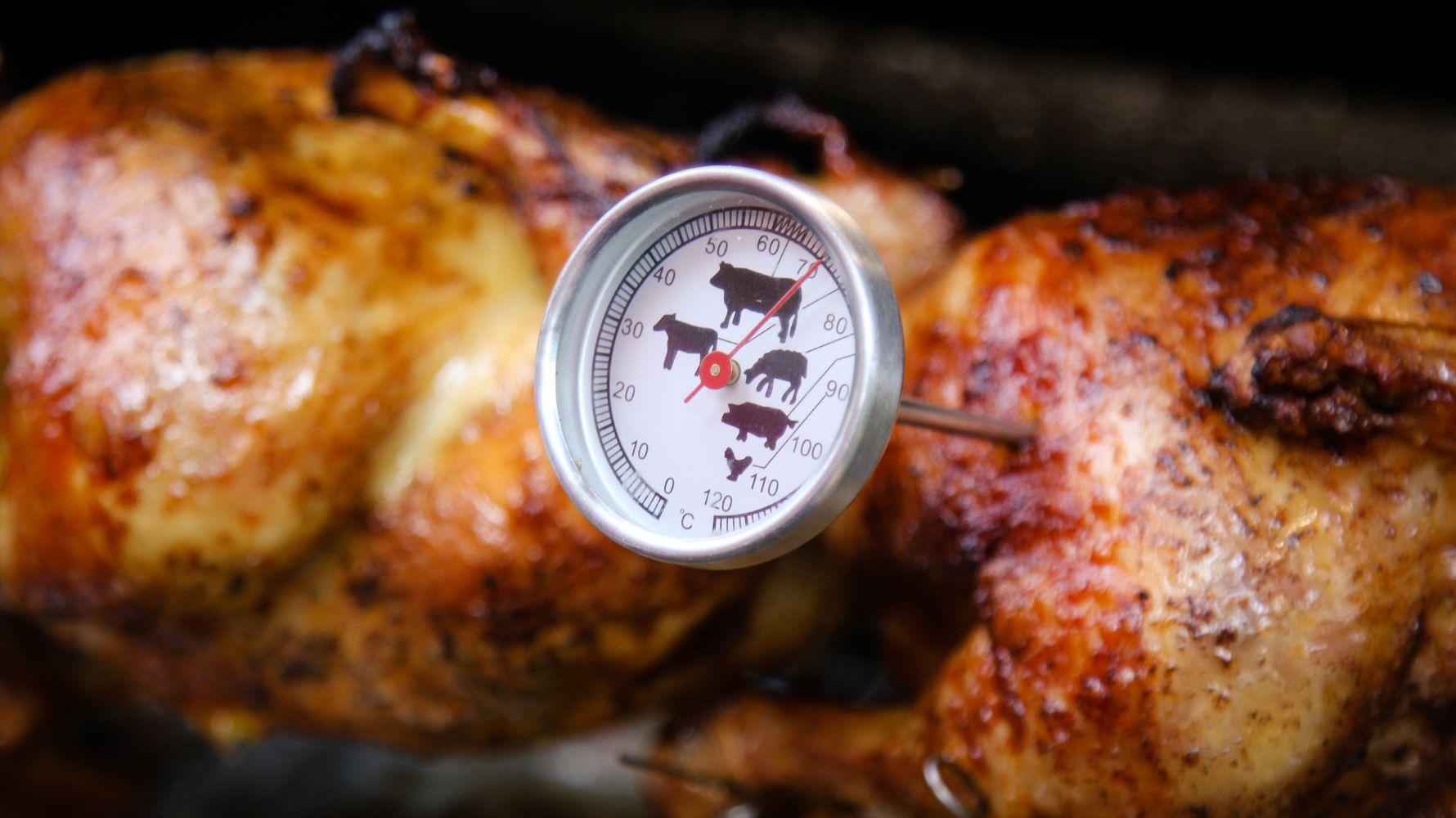
- Salmonella is thermosensitive and is destroyed by proper thermal processing of the meat (internal temperature of at least 70°C).
The legislative framework
Salmonella control in the European Union is regulated by a harmonized legislative system, applicable to all member states.
Main legislative acts
Regulation (EC) No 2160/2003 on the control of salmonella and other specified zoonotic agents transmitted through food
- sets the European targets for reducing the prevalence of Salmonella in poultry flocks;
- obliges the Member States to implement national control and monitoring programs.
Regulation (EU) No 200/2012
- sets the reduction objectives for the prevalence of Salmonella in the meat chicken (broiler) flocks.
Regulation (EC) No 1177/2006
- It establishes the rules regarding the use of vaccines and antimicrobials within the salmonella control programs and specifies that antimicrobials cannot be used as a standard method of salmonella control, but only in exceptional situations provided for by legislation.
The National Program for the Control of Zoonotic Salmonellosis in Romania
- It is implemented by ANSVSA in accordance with European legislation and includes the supervision of poultry flocks, the periodic sampling of samples and the measures applicable in case of detection of Salmonella.
How does it work?
Salmonella is a bacterium that can be found in the environment – in water, soil, air or in animals. Of the more than 2,500 known serotypes, only a small number are frequently associated with foodborne toxoplasmosis in humans.
In poultry farming, monitoring is not limited to these serotypes only. Commercial farms carry out controls and self-checks to detect all types of Salmonella, and when a suspicion is identified, the bacteria is subjected to laboratory tests to determine the exact serotype (typing). Only after this stage is it determined whether measures provided by legislation are necessary.
For consumers, the most important measure of protection remains the proper thermal processing of meat and the avoidance of cross-contamination in the kitchen.
How is this aspect managed in the modern poultry industry?
Salmonella control begins at the farm and continues throughout the food chain.
This includes:
- permanent biosecurity programs;
- monitoring the personnel through periodic analyses;
- sampling of samples in farms, incubators, slaughterhouses and processing units;
- official controls carried out by ANSVSA and DSVSA, supplemented by the operators’ own self-control programs;
- the traceability of each batch of products.
If a suspicion of contamination is identified, additional investigations and the characterization of the bacterium are carried out. In the event of confirmation of a serotype of public health importance, the measures provided for by European and national legislation are immediately applied, so that the non-compliant products do not reach consumers.
Where do the confusions come from?
Salmonella is probably the bacteria that is most often mentioned in connection with chicken meat, but there are some common confusions.
The first is that any identification of Salmonella bacteria would automatically mean a risk to consumers. In reality, not all serotypes are relevant to public health, and the identification of a suspicion on a farm triggers strict investigation and control procedures before the products are sold.
Another confusion is that the responsibility for food safety would exclusively rest with the producer. In reality, the European system operates on the principle of „from farm to fork,” which means that safety is ensured through a succession of measures applied by operators and constantly verified by the competent authorities.
Last but not least, the emergence of warnings regarding the withdrawal of certain products demonstrates that the control system is working. When a non-compliance is identified, the products are withdrawn from the commercial circuit to protect consumers.
In figures
- Over 2,500 Salmonella serotypes are known worldwide.
- Just two serotypes – Salmonella Enteritidis and Salmonella Typhimurium – are considered the main serotypes of interest for public health in the poultry sector.
- In the European Union, the introduction of coordinated salmonella control programs has reduced the number of human cases reported from over 200,000 annually (before 2004) at under 90,000 in 2014, demonstrating the effectiveness of the European control system.
- Salmonella is inactivated by appropriate thermal treatment at an internal temperature of minimum 70°C.
In a nutshell
- ✔ Salmonella is a bacterium present in nature, but only certain serotypes are relevant for public health.
- ✔ In Romania and throughout the European Union there are mandatory monitoring and control programs throughout the entire food chain.
- The products are monitored both through the manufacturer's self-checks and through the official controls of the authorities.
- ✔ Proper thermal preparation and adherence to hygiene rules in the kitchen contribute to the prevention of illnesses.